This article was first published in industry publication Machinery Market
For many manufacturers from the UK and mainland Europe, India is seen as an attractive location for low-cost production. But this overlooks a much bigger opportunity.
As one of the world's fastest-growing major economies, India is investing heavily in infrastructure and expanding and modernising its manufacturing sector. This is creating opportunities for international engineering and technology suppliers, including European companies with specialist capabilities in areas such as automation, precision engineering and advanced production technologies.
What's driving India's manufacturing transformation?
In a fast-changing and volatile world, India is keen to establish itself as a global advanced manufacturing powerhouse, competing with countries such as China, Taiwan and South Korea.
It has several advantages. A vast workforce, a growing domestic market and an expanding industrial base provide strong foundations. Add to this the interest of international manufacturers in diversifying their supply chains through so-called 'China+1' strategies, and the potential for growth is considerable.
In fact, according to Morgan Stanley, India's manufacturing sector could almost triple in size to £1.12 trillion (€1.34 trillion) by 2035. Foreign direct investment (FDI) into manufacturing is also growing, increasing by 18% in the 2024–25 year to reach £14.2 billion (€17 billion).
Government policy is helping to drive growth. The Make in India initiative encourages manufacturing investment, while Production Linked Incentive schemes offer financial benefits to manufacturers in priority sectors.
European companies are already responding to these opportunities. In August 2026, electronics designer and manufacturer discoverIE opened a 9,000 sqm manufacturing facility in Bangalore, tripling its Indian production capacity. The facility produces specialist power transformers and magnetic components for electrification applications.
Yet, for India, there is still some way to go to achieve its goal. Manufacturing currently accounts for only around 15% of its GDP, and many businesses need to improve productivity, technical capabilities and product quality to compete successfully with established international manufacturers.
Opportunities for European companies
India needs to build new factories, modernise existing facilities and develop more sophisticated manufacturing processes. And it needs to do this quickly, both to increase its market share globally and to reduce its dependence on imports in many sectors.
European engineering and manufacturing technology companies have considerable expertise in many of the areas where Indian manufacturers are looking to improve their capabilities.
The automation and robotics sector is a good example. Many Indian manufacturers, particularly in the country’s huge SME sector, still rely on manual processes. As production volumes increase and customers demand more consistent quality, the case for automation is becoming stronger.
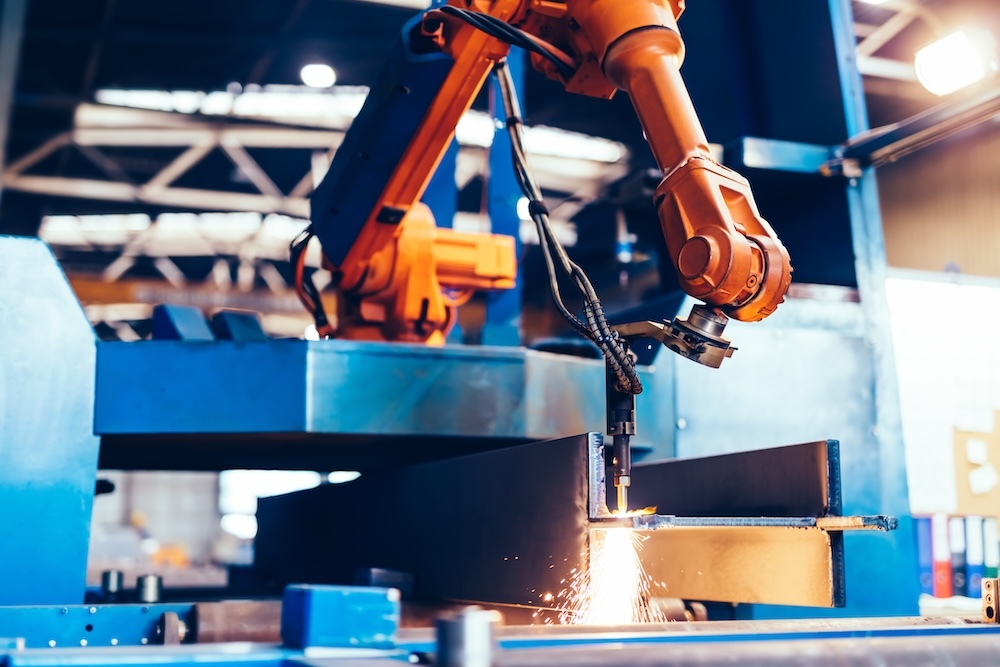
Opportunities range from robotic welding, assembly and materials handling systems to packaging machinery and collaborative robots that work alongside human operators.
Take an Indian automotive components manufacturer supplying international vehicle makers. Introducing robotic welding or automated assembly systems could help it increase output, reduce variations in quality and meet the tighter tolerances demanded by global customers.
For European suppliers of automation equipment, robotics and systems integration expertise, these are exactly the types of challenges they can help address.
Digital manufacturing and quality control offer another opportunity. As Indian factories become more sophisticated, there’s growing demand for technologies that help manufacturers monitor production, identify problems and improve efficiency.
Industrial Internet of Things (IIoT) systems, for example, can connect machinery and collect real-time performance data, while predictive maintenance technologies can identify potential equipment failures before they result in costly downtime.
Machine vision and AI-based inspection systems help improve quality and reduce waste, particularly in sectors such as aerospace and automotive manufacturing, where precision and consistency are critical.
For a manufacturer supplying high-precision components, automated optical inspection systems can identify defects that might otherwise be missed, while production monitoring software can highlight inefficiencies and help improve overall equipment effectiveness (OEE).
These capabilities are vital for Indian businesses entering international supply chains, where traceability, consistency and compliance with demanding customer specifications are essential.
Precision engineering and advanced production technologies are also in demand. India wants to manufacture more high-value products domestically rather than relying on imported components and technologies.
This requires investment in sophisticated machine tools, advanced machining processes, additive manufacturing, specialist tooling and precision measurement equipment.
India's ambitions in sectors such as aerospace, defence, medical devices and semiconductors are likely to create opportunities for suppliers with specialist capabilities.
An Indian aerospace components manufacturer looking to supply international customers, for example, needs high-precision machining equipment, metrology systems and process-control technologies to achieve the required standards. These are areas in which many European engineering businesses excel.
Advanced materials are another area to watch. As Indian manufacturers move into more technically demanding products, they need access to specialist materials and the technologies required to process them.
These include high-performance alloys, composites, speciality coatings and advanced surface-treatment technologies, particularly for applications where weight, durability, temperature resistance or corrosion protection are critical.
Graphene Manufacturing Group (GMG) is an example of a business pursuing these opportunities in India. The company, which develops graphene-based technologies for applications including thermal management, industrial lubricants and energy storage, has expanded into India with our support. It’s targeting opportunities in sectors including automotive, electronics and industrial manufacturing, where demand for advanced materials and technologies is growing.
For European businesses with these capabilities, the opportunity may be less about supplying complete production systems and more about providing a specialist technology, component or process that helps an Indian manufacturer develop a more competitive product.
Where should European companies look?
India is vast and its manufacturing industries are widely distributed. Its states have developed different industrial strengths, supported by local supply chains, skills and investment incentives.
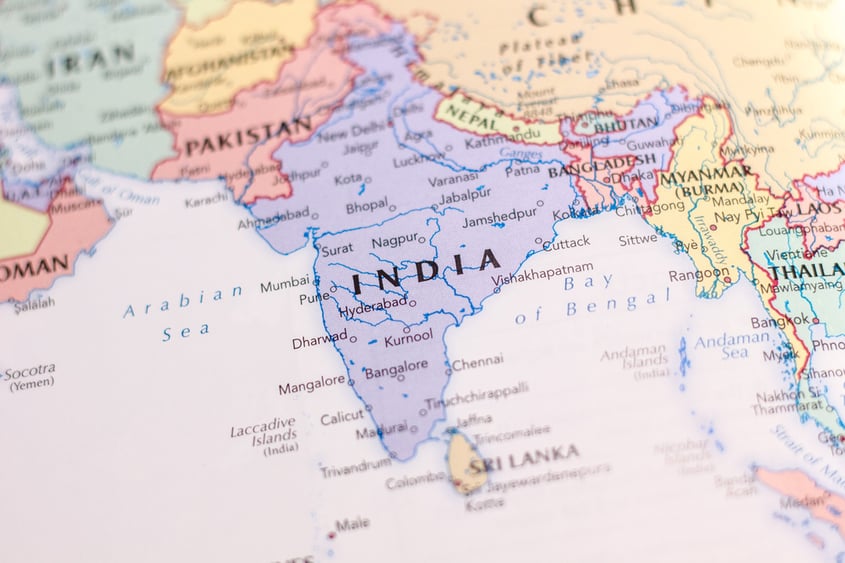
Gujarat, for example, is a centre for semiconductor manufacturing and related technologies, alongside established strengths in chemicals, pharmaceuticals and engineering. Micron's semiconductor assembly and testing facility in Sanand, which opened in February 2026, is an example of investment here.
Maharashtra has a well-established automotive and engineering industry, making it a logical market for European businesses supplying factory automation, robotics, machine tools and precision engineering technologies.
Tamil Nadu is also a major automotive manufacturing centre, with growing electric vehicle and electronics industries. Its expanding manufacturing base creates opportunities for suppliers of automated assembly systems, testing equipment, battery manufacturing technologies and production-line solutions.
Other regions are developing strengths in sectors ranging from aerospace and defence to electronics, pharmaceuticals and renewable energy equipment.
Turning the opportunity into business
Here are my top tips for success.
- Prioritise your target market: Rather than trying to address the entire market at once, identify the states, industries and customer segments where your technology has the strongest fit and focus your resources there.
- Do your homework: Understand the specific challenges facing your target customers. Manufacturing priorities vary, so establish where your technology can deliver tangible benefits, whether through improved productivity, higher quality that demands higher prices and margins, lower costs or new production capabilities.
- Navigate regulations and procurement early: While the business environment is improving, regulatory requirements, certification processes, procurement structures and state-level incentives can be complex. Getting local advice early can help avoid costly mistakes and delays.
- Choose your partners carefully: The right local partner can accelerate market access, provide customer introductions and help navigate commercial and cultural differences. Look for partners with strong relationships, a clear understanding of your technology and a proven ability to deliver.
- Take a long-term view: Building business relationships in India takes time. Whether through regular visits, local representation, partnerships or investment, companies that demonstrate a genuine and sustained commitment to the market are likely to be better placed to succeed.
So, India's manufacturing ambitions are creating opportunities across a broad range of engineering and technology sectors.
For European companies with the right capabilities, the challenge is to identify where they can add most value and to develop a practical, focused approach to building their business in this rapidly evolving market.
To discuss your commercial prospects in India, get in touch here or at contact@intralinkgroup.com

Vaibhav Kapoor is our India & South-East Asia Market Specialist. He has spent more than a decade working at the intersection of India and international business, advising companies and governments on how to capitalise on opportunities in the Indian market.