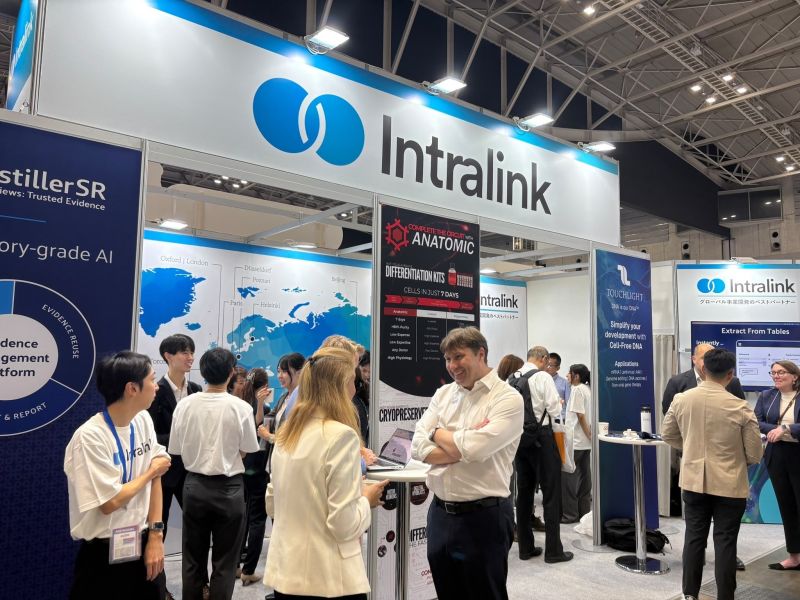
BioJapan 2026, held from 7–9 October at PACIFICO Yokohama, celebrated its 40th anniversary, bringing together pharmaceutical companies, biotechnology startups, research institutions, investors and international industry players.
Held alongside Regenerative Medicine and healthTECH JAPAN, the event attracted nearly 30,000 visitors and provided a platform for building partnerships and exploring new business opportunities.
We hosted an international pavilion to showcase our clients’ game-changing technologies, and our life sciences team spent countless hours discussing with visitors and fellow exhibitors how global innovators can participate in the booming biotech sector in Japan.
Through these conversations, we zeroed in on three important trends: the commercialisation of advanced therapies, growing innovation in drug discovery and biomanufacturing, and the increasing importance of international collaboration.
Regenerative medicine: moving towards commercial manufacturing
Regenerative medicine has been a major focus for years, reflecting Japan's strengths in cell therapy and iPSC research. A joint exhibition under Japan's regenerative medicine CDMO support programme featured 13 companies, including Nikon Cell Innovation, Minaris Advanced Therapies, Japan Tissue Engineering and Cuorips.
The industry is increasingly moving beyond research towards commercial manufacturing, and Japan is increasing its efforts to bring the whole process back onshore – especially in areas such as cell and gene therapy. This is creating demand for reliable production processes, quality control and cost-effective technologies.
For international companies, BioJapan 2026 highlighted opportunities in CDMO services, biomanufacturing, cell culture materials and related technologies. Overseas exhibitors such as IDT Biologika, Wacker Biotech, MyBiotech and PL BioScience demonstrated the international industry's interest in Japan's growing biopharmaceutical market.
Drug discovery: connecting innovation with business opportunities
Drug discovery and biotechnology startups were another important focus. The Cabinet Office introduced 26 startups developing technologies across drug discovery, medical devices and biomanufacturing – providing opportunities to connect with pharmaceutical companies, investors and potential partners from around the world.
While Japan has strong research capabilities, translating scientific discoveries into commercial products remains a challenge. Startups operating in Japan – domestic and foreign alike – are incentivised to have not only strong scientific backbones but also means to generate business outcomes.
This creates opportunities for the international drug discovery and biotechnology community to collaborate with Japan at various stages of product development and commercialisation – i.e., both with established brands as well as up-and-comers – to accelerate time-to-market.
An example of a company already taking advantage of the opportunity is Mabion from Poland which provides biologics development and manufacturing services, supporting biotech companies in advancing products toward commercialisation.
Another one is Sygnature Discovery based out of the UK, providing integrated drug discovery services, helping pharmaceutical and biotech companies accelerate early-stage research and development.
Industrial biotechnology: expanding beyond healthcare
BioJapan 2026 also highlighted the growing application of biotechnology beyond pharmaceuticals.
NEDO (New Energy and Industrial Technology Development Organization) showcased technologies involving microorganisms, enzymes, recycling and sustainable manufacturing, demonstrating how biotechnology can support more efficient industrial processes.
Some of the most interesting approaches/concepts we saw included:
- Enzyme-based plastic recycling: using enzymes and microorganisms to break down plastic waste and recover materials for reuse.
- Precision fermentation: using engineered microorganisms to produce food ingredients and industrial materials more sustainably.
- Bio-based chemical production: using microbial fermentation to manufacture fragrances and specialty chemicals from renewable raw materials, reducing reliance on fossil-based resources.
These developments also create opportunities for companies offering fermentation technologies, sustainable materials and industrial biotechnology solutions.
However, as this is a relatively new field, commercial adoption will depend on demonstrating clear advantages in cost, quality and scalability.
International collaboration: an important route to market
International participation remained a key feature of BioJapan 2026. Companies including Germany's IDT Biologika and Nordic biotechnology businesses such as NextCell Pharma, SynAct Pharma and Sprint Bioscience participated to explore opportunities for licensing, technology development and commercial partnerships.
For overseas companies, Japan offers access to established pharmaceutical manufacturers, advanced research institutions and potential long-term partners. And the country’s pull to attract new technologies to strengthen its competitiveness is palpable – driven in part by the desire to extend its famously ageing population’s health span, as well as other important macroeconomic and geopolitical factors.
However, entering the Japanese market requires more than innovative technology. Understanding local business needs, identifying the right partners and maintaining consistent engagement are essential for converting initial discussions into business opportunities.
Why BioJapan matters for international companies
BioJapan is more than a technology exhibition. Its business partnering programme enables companies to arrange targeted meetings with potential customers, distributors, licensing partners and research collaborators.
For international companies considering Japan, participation offers several advantages:
- Direct access to Japanese pharmaceutical and biotechnology players
- Opportunities to introduce technologies and assess market interest
- Insights into emerging industry trends and customer requirements
- A platform to develop partnerships and strengthen market visibility
However, exhibiting alone does not guarantee commercial success. Preparation before the event, targeted meeting arrangements and structured follow-up are important to maximise the value of participation.
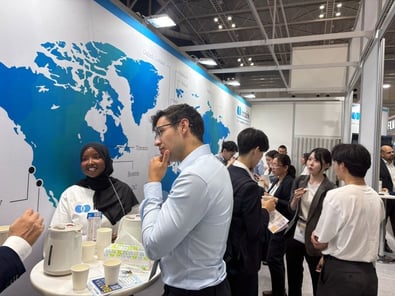
The Intralink pavilion, for instance, featured our clients DistillerSR, Anatomic Inc. and Touchlight who, alongside our bilingual teams supporting them at each step, underwent an intense programme of exhibition activities, business partnering meetings and networking. In total, we facilitated close to 400 interactions with Japanese market stakeholders – many of which we hope will get our clients closer to significant commercial outcomes in Japan and beyond.
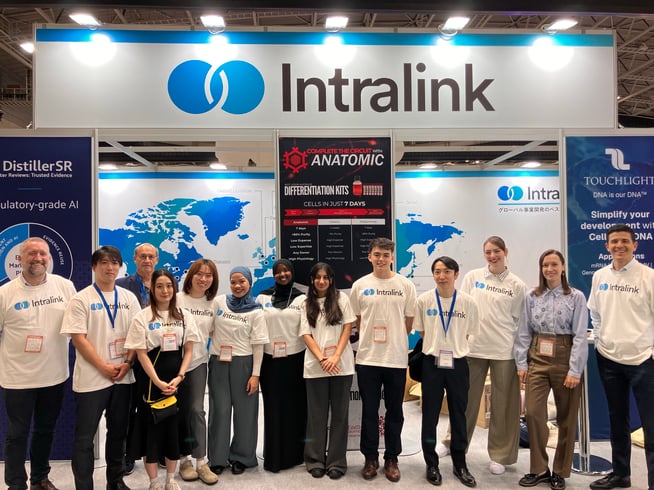
Daria Olijnyk-Dallis, Head of APAC Sales at Touchlight, another co-exhibitor, said: “Japan is such an exciting market for us and Intralink's bi-lingual support on the ground these two years was invaluable during the event.”
The head of our Medtech & Life Sciences practice, Graham Barker , who's been a regular at BioJapan for many years, added: "While the desire to collaborate with the global life sciences community to bring new products to market is undoubtedly there, Japan remains quite conservative and not exactly a market for quick wins. But exhibiting at events like BioJapan helps our clients to understand their Japanese counterparts' decision-making processes and how to influence them more effectively. It also opens doors to new relationships and fosters existing ones.”
So, while events like BioJapan are becoming a platform for international firms to do business in Japan, market entry hopefuls would do well to plan their moves carefully and utilise in-market partners.
Looking ahead: join Intralink at BioJapan 2027
As we look ahead to BioJapan 2027, we welcome international life sciences companies interested in exploring Japan to consider joining Intralink as co-exhibitors.
By exhibiting together, companies can benefit from a shared exhibition presence, local business development support and assistance in arranging targeted meetings with relevant Japanese organisations. Whether your objective is to explore market demand, identify commercial partners or expand an existing presence in Japan, BioJapan 2027 offers an opportunity to take the next step.
If you’d like to discuss how we can help you start your Japan expansion today – or to join us at BioJapan next year – email us at contact@intralinkgroup.com or get in contact here.