This article was first published in the Business Weekly newspaper here.
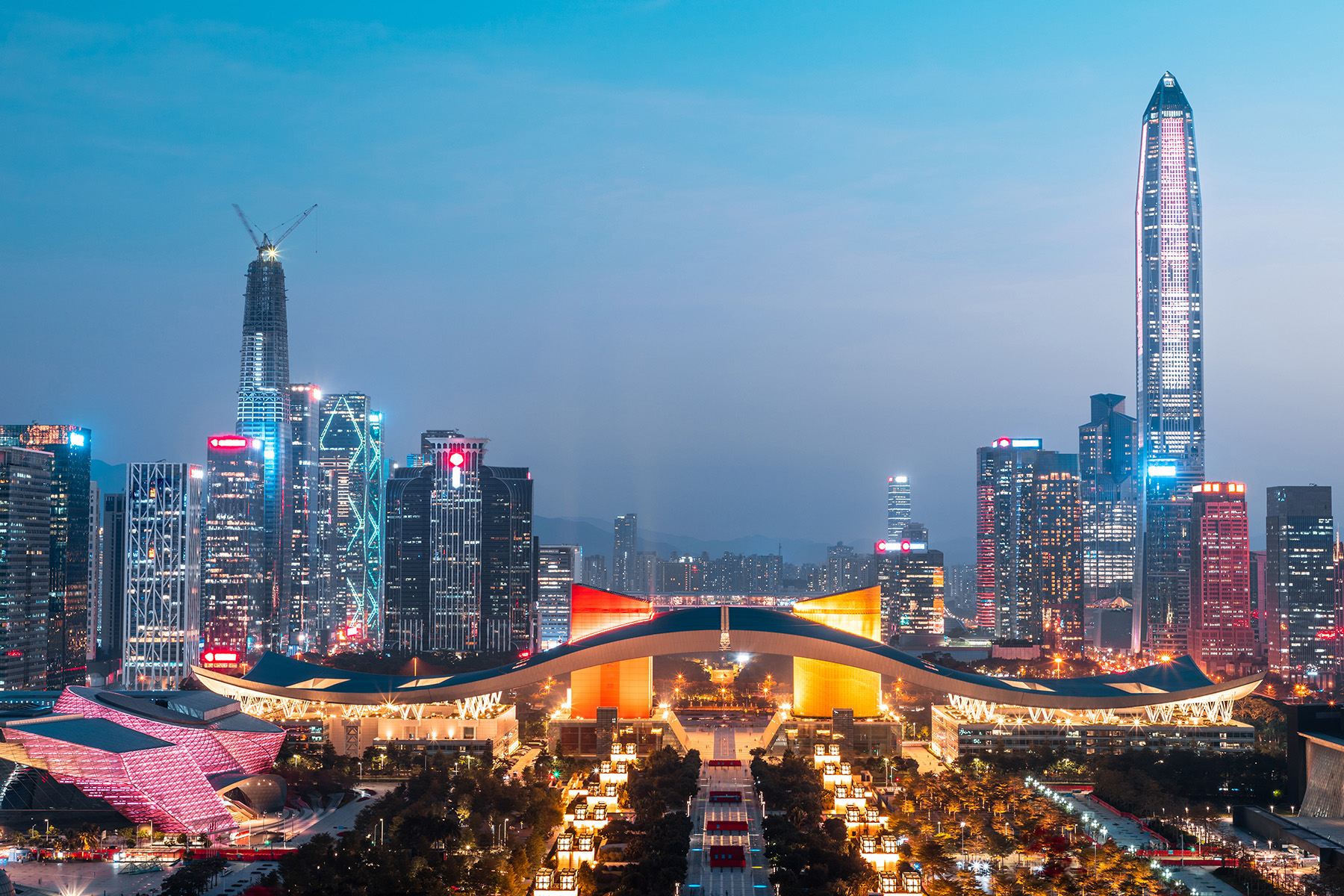
Shenzhen’s futuristic skyline will grab plenty of attention as the Asia Pacific Economic Cooperation (APEC) leaders gather in the city this week. But for technology suppliers outside China, the most interesting question is: what happens inside the factories below that skyline?
Referred to as China’s Silicon Valley, Shenzhen is a major hub for high-tech industries and advanced manufacturing.
The APEC forum convening there brings together 21 member economies to foster economic cooperation, strengthen trade and promote shared prosperity across the region. China is hosting it for the third time, this time under the theme ‘Building an Asia Pacific Community to Prosper Together’.
As APEC leaders meet over the next few days, China will seek support for closer regional trade and cooperation on AI. Beijing wants Asia Pacific economies to develop technical standards together and collaborate on open-source technology.
Your next customers
As the host, Shenzhen has the chance to showcase how its tech sector is already putting AI and robotics to work. For foreign suppliers watching that display, they may see a massive field of increasingly capable competitors. In fact, many of those same manufacturers could also become their biggest customers.
One of China’s strengths is commercialization. Its manufacturers can take a promising design, put it into volume production and improve it as users put it to work. That ability makes a Chinese manufacturer a potentially valuable customer for an overseas specialist.
Chinese companies still have good reason to buy advanced technology if developing an equivalent in-house product would delay a launch or if using it would improve performance across an entire product line.
AI, robotics and new energy are top of mind for Chinese technology companies. These are also priorities in China’s 15th Five-Year Plan. Chinese technology companies tell us they still need outside expertise to meet their goals. Some are willing to buy technology from overseas suppliers or even invest in its development.
For international suppliers, the opportunity is to reach the people deciding how products are designed and built.
Show an engineering lead how your materials, sensors or design tools can meet a performance target or bring a launch forward. If the team adopts your technology, its production lines and sales network can give you faster access to Chinese and global markets at greater scale.
Get in early
Estimates put China’s robotics market at $14.1 billion in revenue in 2026, making it the world’s largest. Robots assemble products, move goods through warehouses, clean homes and assist shoppers.
Humanoids are a newer focus, with Chinese production expected to exceed 100,000 units this year as developers explore uses in factories, shops and eventually homes.
For suppliers of sensors, advanced materials or simulation and testing tools, the time to reach developers is while they are choosing what goes into each machine. A selected supplier can then grow with its partner as production expands.
The opportunity varies by industry. A battery maker may need a new material and the equipment to process it. A semiconductor packaging team may need test software and precision instruments to improve yield. In AI, reducing memory use or the number of tokens per task can make a service cheaper to run.
Each gives an overseas supplier a chance to win business by lowering costs, improving performance or shortening development time.
Overseas growth
Meanwhile, intense competition at home is squeezing margins and pushing Chinese manufacturers to seek growth overseas.
Chinese electric car exports doubled in 2025 and are expected to have maintained that trajectory in 2026 as well.
US President Donald Trump, Chinese President Xi Jinping and European leaders want to attract investment at home and tensions over trade persist. Regardless, Chinese manufacturers still need to reach customers overseas, whether by exporting from China or investing directly in those markets.
Whichever route they take, they need to decide which capabilities to build themselves and which to source from outside. That decision creates an opening for international technology companies.
A Chinese manufacturer may have the scale to enter a new market but still need technology and solutions to adapt its product or people on the ground to support it. A supplier that fills either gap can help the manufacturer reach overseas buyers sooner and find a wider market for its own technology as its customer grows.
IP protection
For international suppliers, working closely with a Chinese manufacturer can raise questions about protecting intellectual property. In fact, Chinese technology companies have a growing stake in protecting their own inventions.
Considering this, Chinese courts are playing a more active role in IP cases involving both domestic and overseas companies. Also, some of the most important decisions regarding IP protection happen well before a contract is signed.
Whatever the technology, suppliers can use proven strategies to protect their IP while giving customers what they need to use the product and keeping the underlying know-how in-house.
New opportunities globally
By the time the APEC Summit ends and the delegates leave Shenzhen, it will have shown just how much China’s tech companies can do. For international suppliers, the most interesting question is what those companies want to do next and where they could use a partner.
Even amidst acute trade tensions, such partnerships can lead to sales in China and new opportunities globally as Chinese customers expand overseas.
If you’d like to discuss opportunities for your company in China, get in touch with us at contact@intralinkgroup.com.