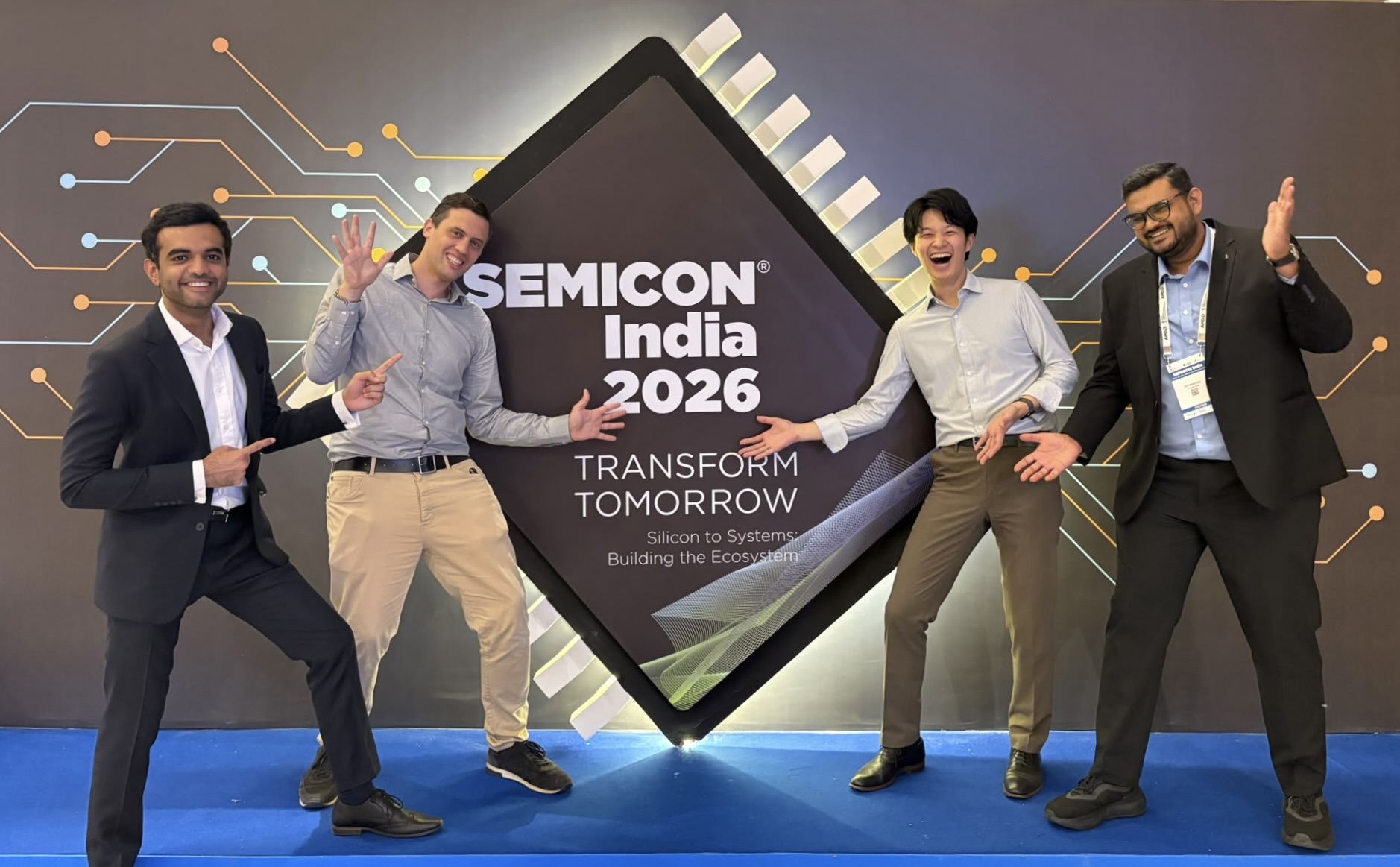
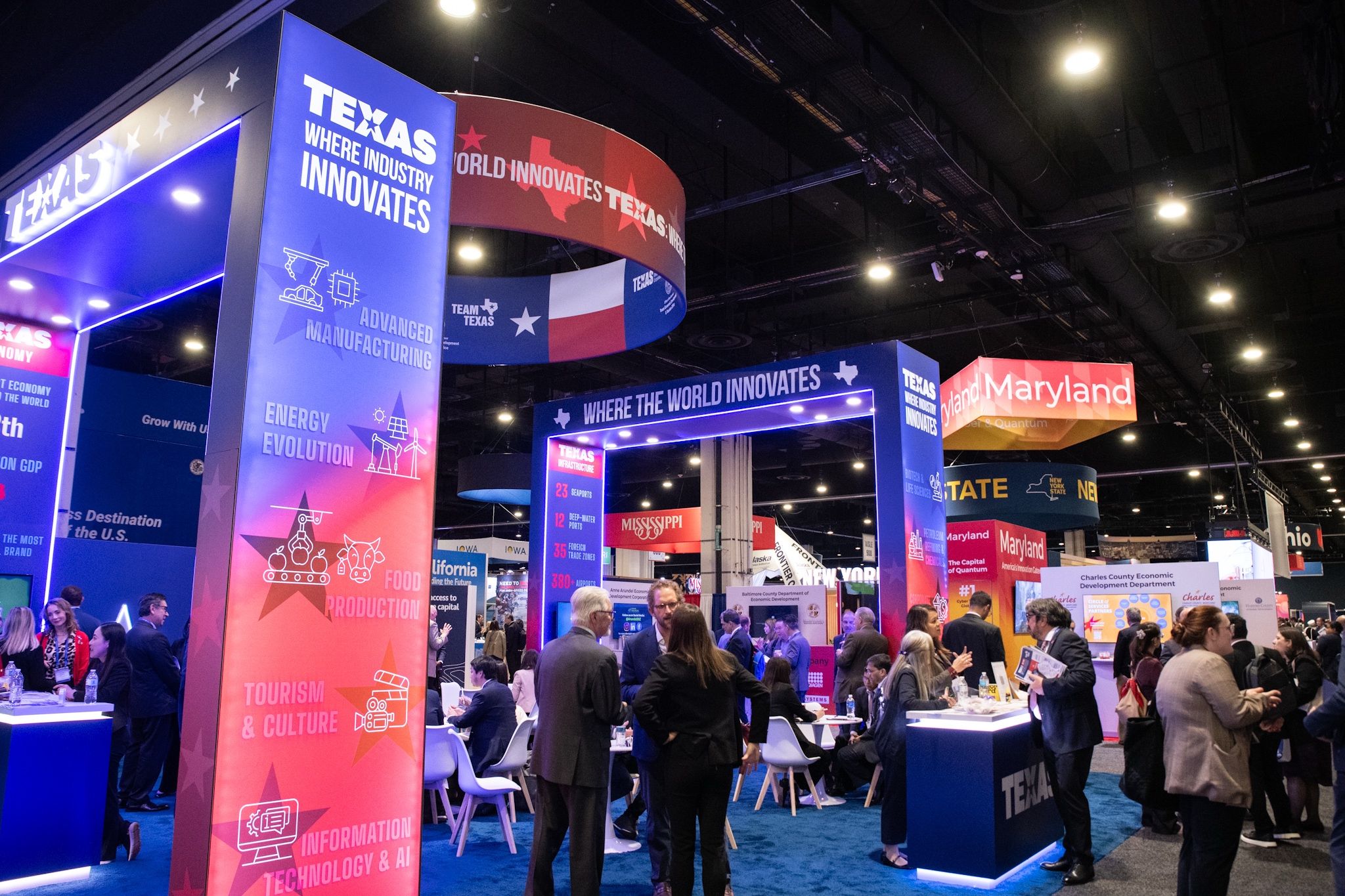
This week, I’m at the SelectUSA investment summit in Maryland. And one thing’s clear: the global FDI landscape has shifted decisively.
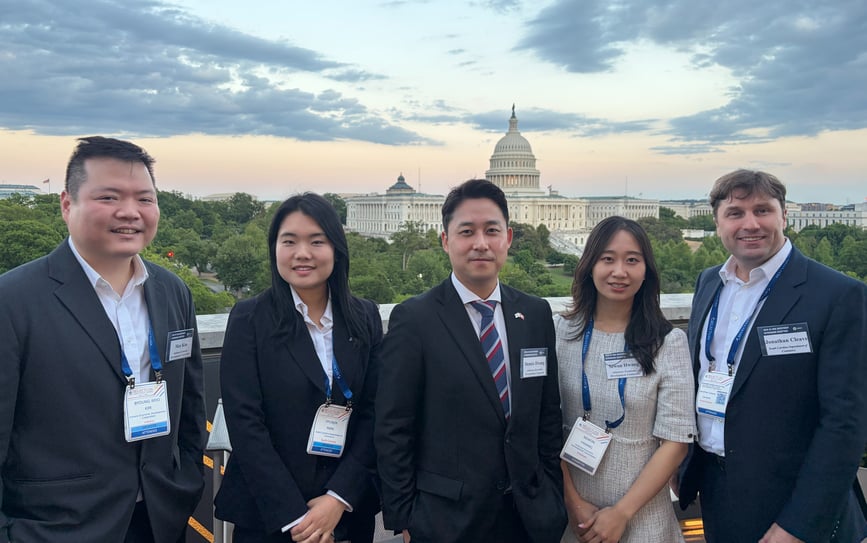
Jonathan Cleave (right) with some of the rest of our team at SelectUSA
The opportunities for US economic development organisations (EDOs) looking to attract investment to their region are now more concentrated, strategic and increasingly aligned with national priorities.
And, at the centre of that shift, sits East Asia, specifically Japan, South Korea and Taiwan. These are not marginal investors. They’re already among the largest, most committed and most relevant sources of high-value FDI into the United States, and that trend will only accelerate in 2026.
The move towards ‘aligned investment’
US policy is now explicitly geared towards reshoring critical industries, reducing dependence on China and building resilient supply chains in strategic sectors.
This policy is being implemented through trade agreements, targeted tariffs, incentives and direct government involvement in investment decisions. The result is that capital from aligned economies is actively being steered into the US, with East Asia leading that charge.
Japan: steady, large-scale and infrastructure-led
Japan remains the largest foreign investor in the US with close to $900 billion invested. Its companies account for over half a million US manufacturing jobs – considerably more than the contribution from any other country.
What’s different in 2026 is the level of coordination and scale. A $550 billion US-Japan investment framework is now being deployed. The first announcements have been focused on the US energy sector, from natural gas power generation facilities and crude oil export terminals to the deployment of small nuclear reactors (SMRs).
While developing power generation and energy export infrastructure is the most pressing issue for both countries, investments under the framework will also target semiconductors, AI, quantum computing and critical minerals. And Japanese companies continue to invest in automotive supply chains, chemicals and electronics to ensure they don’t lose market share to rivals.
Japanese companies tend to be patient and methodical investors. They often look for locations that can support scale and stability over a period of decades, and their investments tend to be spread widely across the country, mitigating concentration risk and affording Japan Inc. greater sway in Congress.
South Korea: faster, more concentrated and highly strategic
South Korea’s investment profile is different but equally compelling and Korean companies have been among the most visible investors in the US in recent years.
What stand out are their speed and focus. While Japanese firms build gradually, Korean companies move decisively, particularly when supported by policy incentives or supply chain imperatives. The result has been a wave of high-profile investments from EV and battery plants across the southeast to semiconductor manufacturing facilities in Texas and Indiana.
Today, that activity is being reinforced by a $350 billion US-Korea investment agreement, with almost half of this aimed at the shipbuilding and maritime defence industries. Indeed, Korean investments in the US defence sector are expected to grow rapidly as the country becomes an increasingly important player.
For US EDOs, the key insight is that Korean companies rarely move alone. They invest as part of ecosystems – OEMs, suppliers and partners relocating together – so winning one project can often lead to others. It also means Korean investments can be more concentrated geographically within certain states and regions.
Taiwan: concentrated, technology-driven and ecosystem-led
Taiwan’s investment profile in the US is highly concentrated and arguably the most strategically important.
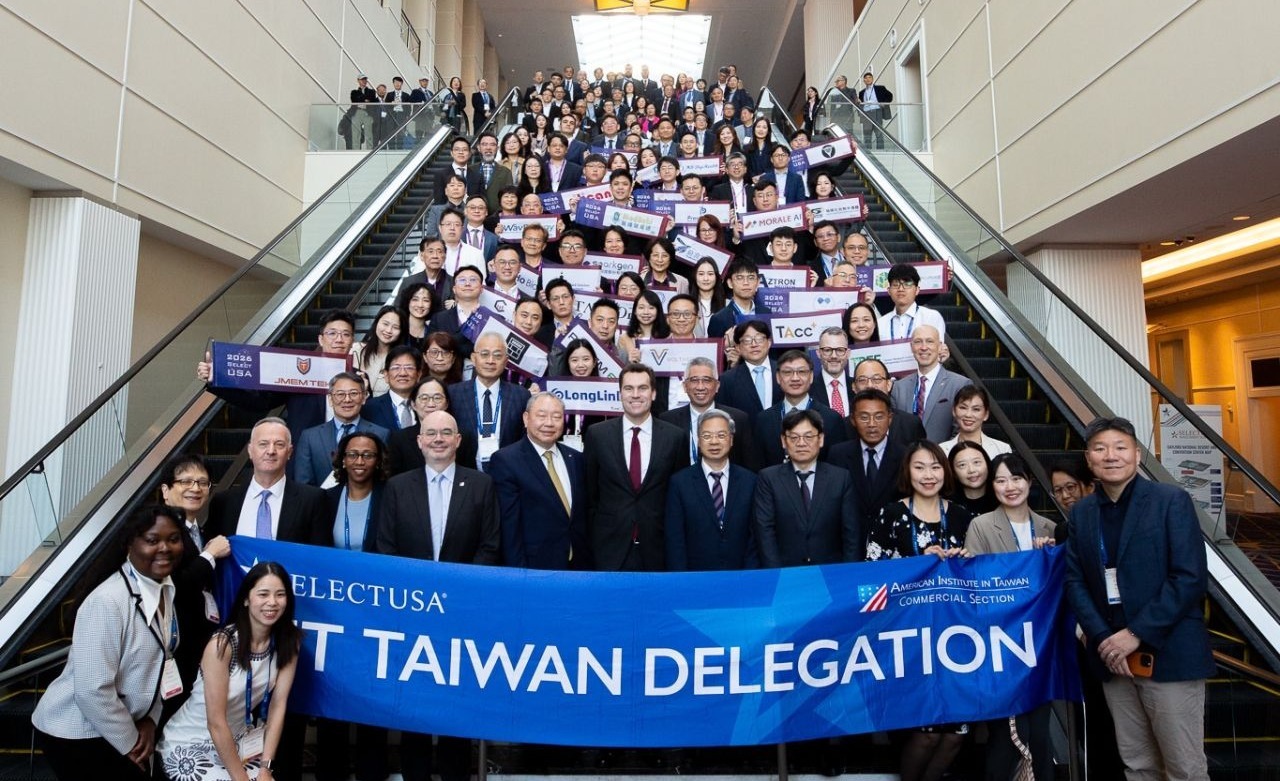
Taiwanese investment is overwhelmingly focused on semiconductors, AI infrastructure and advanced electronics manufacturing. A 2026 investment agreement between the US and Taiwan has further accelerated this trend, with $250 billion pledged from Taiwan for advanced manufacturing investment in the US and the same amount again in credit guarantees to support supply chain expansion.
Importantly, this doesn’t only focus on TSMC but is about the relocation of an entire ecosystem: semiconductor fabs and suppliers, data centre hardware providers and the power systems and industrial component makers needed to support that infrastructure.
And, alongside US market access, Taiwanese firms are looking for locations that can support tightly integrated industrial clusters, often linked to hyperscalers and advanced manufacturing clients.
The common thread
Despite these differences, there are common themes underpinning US investment from East Asia.
Firstly, much of this is policy-driven capital investment with decisions increasingly tied to national strategies and geopolitical alignment.
Secondly, there’s a clear sector focus, with most activity concentrated in:
- semiconductors and AI
- energy and infrastructure
- advanced manufacturing
- critical minerals and supply chains
Thirdly, due to the highly-sophisticated nature of the industries involved, projects are more likely to land within broader ecosystems and tight supply chain clusters.
How to capitalise
So, the question’s not whether investment will come to the US, but how you can position your region to have the best chance of capturing it.
East Asian companies typically:
- rely on trusted relationships and local networks
- favour culturally-informed engagement
- move through structured, opaque decision-making processes
This is where the execution of investment attraction strategies becomes critical.
To discuss how we could support your FDI attraction work, you can contact Jonathan at jonathan.cleave@intralinkgroup.com

As Group MD, Jonathan oversees our operations across APAC. Originally from the UK, he moved to Korea in 2003 and, after completing his Master’s at Seoul National University, was awarded a scholarship to undertake a PhD on South Korean industrial policy. He has helped hundreds of companies worldwide to enter East Asia and attracted significant investment from Asia for our government clients. Jonathan is also the former Chair of the Association of American State Offices in Korea.