We recently hosted a webinar on exporting to Southeast Asia's manufacturing hubs, aimed at North American companies weighing up market entry into one of the world's fastest-growing regions. Southeast Asia is the fourth-largest economy in the world when treated as a single bloc and the region is situated close to some of the world’s fastest-growing markets, but the region is highly diversified and understanding just how different its markets are from one another is essential to making progress.
Alex Barton, our Managing Director for Southeast Asia, covered where the growth is happening, which sectors present the strongest opportunities for U.S. and Canadian exporters, and how foreign companies can realistically approach market entry.
You can download the slides used in the webinar here, or read on for a writeup of the session.
All gas, no brakes
Southeast Asia spans 11 countries, but most trade and manufacturing activity is concentrated in six: Singapore, Malaysia, Thailand, Indonesia, Vietnam, and the Philippines (commonly referred to as the “ASEAN 6”). These markets account for the majority share of the region's GDP and export volume, while the remaining five countries tend to trade indirectly through their larger neighbours.
Growth across the ASEAN 6 is outpacing much of the rest of the world. Vietnam grew 8% last year, Indonesia, Malaysia, and the Philippines all grew around 5%, and even Singapore, the most developed economy in the region, 4.8%. Thailand alone grew around 2%.
Three forces are driving this growth: rapid urbanisation and an expanding middle class, rising consumer spending (particularly in healthcare and Food & Beverages), and intense competition between neighbouring countries. Southeast Asia is also one of the most extensively covered regions in the world for free trade agreements, including RCEP (covering 15 countries in Asia-Pacific) and the trans-Pacific CPTPP. In addition, Canada, the EU, and countries in the Middle East are in discussions to expand trade ties further, including on digital trade.
For U.S. exporters, Southeast Asia is already the third-largest export market globally for American products and services.
Meet the ASEAN 6
1. Singapore
Singapore is the region's most advanced and mature economy, strong in high-end manufacturing (petrochemicals, pharma, electronics, aerospace) and services such as finance and logistics. Over 7,000 multinationals base regional or global headquarters there, and increasingly R&D functions too. The new Johor–Singapore Special Economic Zone is designed to let companies headquarter in Singapore while manufacturing across the border in Malaysia, where labour costs are lower.
2. Malaysia
Malaysia has a diverse industrial base spanning oil and gas, agriculture, electronics, semiconductors, medical devices, mining, and renewables. Beyond the traditional hub of Peninsula Malaysia, East Malaysia (particularly Sarawak) is emerging fast, driven by mining, forestry, and renewables investment.
3. Vietnam
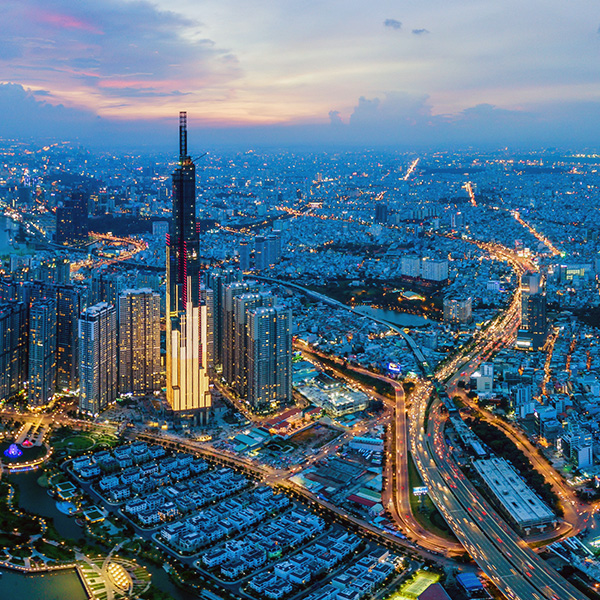
Vietnam is the fastest-growing manufacturing sector in the region. Investment is spreading beyond Ho Chi Minh City into Hanoi and the provinces. Importantly, the country still faces energy, environmental, and infrastructure constraints, which is a good opportunity for U.S. firms in productivity improvement and digitisation.
4. Thailand
Thailand, traditionally the region's manufacturing powerhouse, Thailand’s growth has slowed recently, hurt by high household debt and intensifying competition from Vietnam as well as China and Korea, especially in the automotive sector. Despite this, it remains an important player in electronics, automotive, and F&B manufacturing.
5. The Philippines
The Philippines finds itself often overshadowed by Vietnam in terms of growth, but its economy grew 6% in 2025. Its economy is more services-driven than its neighbours, underpinned by a large, English-speaking business process outsourcing (BPO) sector and a young, software savvy population. Manufacturing still lags behind Thailand and Vietnam, though recent U.S.–China trade tensions have redirected some manufacturing investment here.
6. Indonesia
Indonesia is a challenging but high-reward market. Tariffs and local content requirements make a strong local partner essential. However, it boasts the world's fourth-largest population of 187 million people spread across 17,000 islands), and is rich in nickel, copper, as well as agricultural commodities.
The 6’s seven priority sectors
1. Electronics & Semiconductors
The region's most capital-intensive sector, accounting for 20–50% of export value in some countries. Malaysia’s Penang is often dubbed the “Silicon Valley of Southeast Asia”, and the country handles around 13% of global back-end semiconductor services, with major investment from Intel, Infineon, AMD, Bosch, and OSRAM. Singapore commands roughly 10% of global chip output, 5% of wafer capacity, and 20% of semiconductor equipment production, and leads in high-margin R&D and headquarters functions. Vietnam has been the top beneficiary of the “China plus one” diversification strategy and continues to attract new manufacturing investment.
2. Automotive
Southeast Asia is benefitting from the erosion of Japanese dominance in this sector by Chinese and Korean competitors. Thailand remains the region's automotive hub, standing as the 15th-largest global exporter of vehicles and parts, with roughly 720 tier-one and over 1,000 tier-two/three suppliers, and is seeing rising demand for specialised components, advanced electronics, and automated assembly. Indonesia, leveraging its position as a top-five global nickel producer, is attracting EV and battery investment (including from Hyundai) and needs heavy industrial machinery and battery-chain technology. Vietnam, led by domestic brand VinFast, is looking for automotive software, autonomous driving solutions, testing systems, and EV charging infrastructure.
3. Petrochemicals
The focus here is sector on downstream technology. Singapore, particularly Jurong Island, dominates high-margin specialty materials and is looking for technology enabling process automation, digital twins, and industrial AI. Thailand, led by local conglomerates like PTT Global Chemical and SCG Chemical, has the largest integrated petrochemical capacity in the region and is investing in bioplastics and advanced specialty materials. Malaysia is a regional leader in oleochemicals, converting palm oil into inputs for personal care, cosmetics, and food processing.
4. Medtech & Pharma
Singapore is the regional hub for advanced biomedical science, particularly biologics, vaccines, cell therapy, and needs lab automation and cleanroom technology. Thailand's medical tourism boom is driving investment in private hospitals and demand for advanced diagnostic equipment. Malaysia has built an export-oriented medtech sector, with around 580 local manufacturers dominating medical consumables such as gloves and catheters.
5. Textiles
Vietnam has overtaken Bangladesh as the world's second-largest ready-made garment exporter, supplying around 20% of all U.S. apparel imports through some 6,000 manufacturers who are aggressively modernising. Indonesia's textile sector employs around 5 million people and is being reshaped by a digitally savvy domestic market and the rise of live/social commerce. Philippines is pursuing similar efficiency gains to stay competitive with both.
6. FMCG
FMCG is one of the region's largest consumer opportunities driven by rising disposable incomes and a combined population of roughly 700 million. Indonesia, as one of the most socially-commerce-driven markets in the world, is seeing strong growth in beauty and personal care, driving investment in flexible manufacturing and high-speed packaging. Thailand's mature, tourism-fuelled beauty and retail sector shows a similar pattern.
7. Food & Beverage Manufacturing
F&B accounts for roughly 10% of the region's GDP. Thailand alone has over 10,000 food processing companies exporting poultry, seafood, and ready-to-eat meals to Western markets. To this end, machinery, automated packaging, and digital quality control solutions are a high priority. Indonesia, the world's largest Muslim-majority nation, is driving demand for halal-compliant batch tracking and digital compliance technology. Vietnam's local diary production meets only about 40% of demand, and exporters that can address this will be welcome.
The driving forces
There are six main market forces pushing forward this growth and creating opportunities for your business.
-
Automation, robotics & physical AI. A response to rising labour costs and labour shortages across the region.
- Advanced manufacturing equipment. As producers move upmarket, demand is growing for testing systems, cleanroom technology, and precision production tools.
- Sustainability. Driven less by local consumer demand than by Western buyers and governments requiring emissions management, water treatment, and decarbonisation solutions.
- Compliance. There is a growing need for support with product certification, quality standards, regulatory compliance, and ESG reporting as export requirements tighten.
- Traceability. Supply chain visibility, digital documentation, and data management is now being prioritised, particularly in food and halal production.
- Greenfield services. There is ongoing demand for plant design, process optimisation, testing, maintenance, and training services as new capacity continues to be built.
Considering a move?
So if what you’ve just read has sparked some interest (and it should!), stick to these points to maximise your effectiveness.
-
Do your homework first. Southeast Asia is 11 (effectively six) very different markets. Identify the right one and the entry sequence that suits you.
-
Think beyond the initial sale. Local support, servicing, and supply chain presence matter. How will your customers will be serviced long-term? And, for all future sales, expect longer sales cycles.
-
Adapt pricing, features, and support. This needs to be market by market, not region-wide
-
Understand the regulatory landscape upfront to avoid costly surprises later. This is particularly key for a highly-regulated local market like Indonesia.
-
Plan to work with a partner. The region's relationship-driven business culture means direct-to-end-user sales are the exception, not the rule.
-
Invest in your partners. Distributors in the region often have their pick of Western suppliers, so clear value propositions, strong training, and support at trade shows and exhibitions help partners and your business case.
-
Build relationships. Trust-building here typically requires face-to-face interaction, collaborative decision making, and a less transactional approach than many North American companies are used to at home.
The Bottom Line
Southeast Asia has six distinct economies at different stages of maturity, each with its own sector strengths and entry requirements. The opportunity is substantial for North American exporters willing to do the groundwork, identify the right country and sector fit, and invest in the right local partnership.
To discuss your company's prospects in Southeast Asia's manufacturing hubs contact Sarath Menon, our Global Head of Trade, at sarath.menon@intralinkgroup.com.
.jpg?noresize)