Microcon 2026, an annual national congress of the Indian Association of Medical Microbiologists, held at the All India Institute of Medical Sciences (AIIMS) in Nagpur, brought together researchers and representatives from leading medical centres to discuss the changing demands of clinical microbiology and emerging challenges in the space.
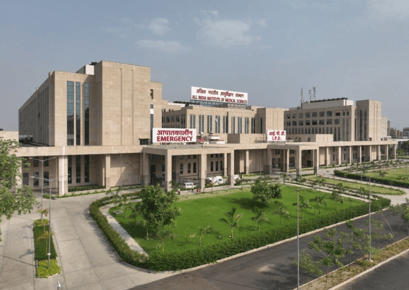
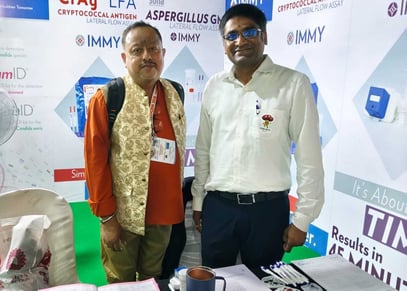
Left: AIIMS Nagpur, India - location of Microcon 2026. Right: Dr Siddarth at the event with our client IMMY's Head of Sales, India, Phaninder Koppula
One of the clearest takeaways was that India’s diagnostic needs are evolving. The next phase of growth is likely to extend beyond routine bacteriology, with increasing demand for fungal diagnostics, antimicrobial resistance (AMR) surveillance and rapid molecular testing.
For international diagnostic companies looking to enter or expand in India, this shift presents opportunities across diagnostic kits, point-of-care testing (POCT), consumables and laboratory equipment. But understanding where demand is emerging and how to reach the right customers will be critical.
The diagnostic landscape is changing
The microbiology landscape in India is being reshaped by the growing adoption of molecular diagnostics, reducing testing times from days to hours.
Newer AIIMS institutions are also emerging as important surveillance hubs for rare infections and antimicrobial resistance. This is creating demand for advanced fungal, viral and precision diagnostic technologies.
For the diagnostics industry, this represents more than technological modernisation. It reflects a shift in clinical requirements. Hospitals increasingly need tools that can rapidly identify invasive fungal diseases such as candidiasis, mucormycosis, cryptococcosis and aspergillosis, detect drug-resistant organisms and diagnose complex bacterial infections where fast and accurate identification of pathogens can significantly impact treatment outcomes and reduce antimicrobial resistance.
Fungal diagnostics, in particular, remain an underdeveloped area despite the growing clinical need. India’s burden of diabetes and tuberculosis creates significant risk factors for fungal infections, yet many hospitals still lack routine access to fungal biomarkers and rapid pathogen identification tools.
Dr Nivedita Gupta, Scientist and Head of Communicable Diseases at Indian Council of Medical Research (ICMR) Delhi, said at the event: “Vaccine candidates developed overseas, with technology transferred to Indian industry, could be a game changer if proven effective through clinical trials. We aim for over 95% coverage across interventions by 2030, reducing TB incidence to fewer than 50 cases and deaths to fewer than five. ICMR has deployed an AI-based chest X-ray screening tool and validated a cost-effective, WHO-compliant open RT-PCR test.”
Technologies such as Cryptococcal Antigen testing, Aspergillus Galactomannan assays, beta-D-glucan testing, fungal susceptibility platforms and rapid species identification systems, therefore, represent potential growth areas.
Five areas under spotlight in clinical microbiology
Discussions and presentations at Microcon 2026 highlighted five areas with growing relevance for diagnostic companies:
1. Rapid AMR testing
- Carbapenemase detection
- Extended-spectrum beta-lactamase (ESBL) detection
- Molecular AMR panels
2. Automated antimicrobial susceptibility testing (AST) platforms
- Faster susceptibility reporting
- Better-informed antibiotic optimisation
3. Blood culture automation and AMR informatics
Blood culture automation is particularly relevant for Tier 2 and Tier 3 referral hospitals, alongside the growing need for AMR informatics.
4. Automated antibiograms
- Antibiotic stewardship dashboards
- Surveillance software
5. Fungal susceptibility testing
The conference also highlighted vaccines, the adoption of advanced laboratory technologies and collaboration as important priorities for medical centres across India.
Opportunity extends beyond major hospitals
For global diagnostic manufacturers, these developments point to opportunities across a wider range of healthcare settings.
While leading medical institutions and AIIMS centres remain important reference points, regional referral hospitals, particularly in Tier 2 and Tier 3 cities, also offer potential markets for diagnostic technologies. Companies providing affordable, clinically relevant solutions tailored to the needs of these underserved centres and emerging AIIMS networks are better positioned to tap this demand.
Entering India requires more than a distributor
The market opportunity is significant, but the route to market needs careful consideration.
India has established distributors that can support international manufacturers entering the healthcare sector. The Government e-Marketplace (GeM) portal also offers a route into public healthcare procurement, with a transparent platform for companies to participate in tenders alongside established players.
However, appointing a single pan-India distributor or relying on a small sales team to cover both public and private healthcare markets is not necessarily an effective strategy.
We have seen large companies incur losses after entering unfamiliar markets through single-distributor arrangements or without sufficient groundwork. A distributor with a broad geographical footprint may not necessarily have the right hospital access, technical capabilities or reach across every relevant customer segment.
A more targeted approach is often needed: understanding the market, identifying the strongest regional distributors, segmenting potential customers and prioritising accounts that offer a realistic route to entry.
This is where local market intelligence becomes particularly important. We have helped international diagnostic companies assess the Indian market, identify distribution partners and prioritise potential customers.
Turning market potential into commercial opportunities
India’s clinical microbiology ecosystem is expanding, creating new opportunities for global diagnostic companies. But success will depend not simply on identifying demand or appointing a distributor.
For companies considering India, the question is not just what the market needs, but how to reach the right parts of it and convert that demand into sustainable business.
To discuss the potential of your diagnostics business in India, contact us here or email us at contact@intralinkgroup.com.

Dr Siddhartha Datta is our India-based medtech and life sciences specialist. He has 27 years’ experience in healthcare, life sciences and diagnostics and is a trained microbiologist, having worked extensively in hospitals in India and the US and for advisory firms in India, Malaysia and Singapore.